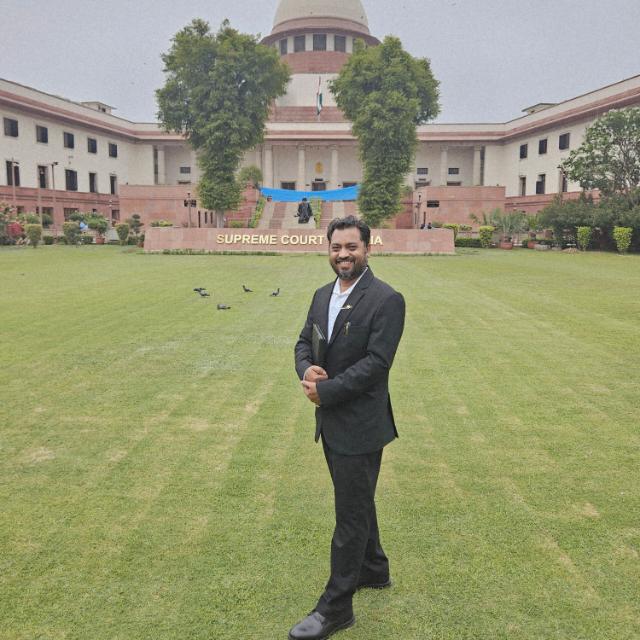
Supreme Court Legal Advice in Delhi for Civil, Criminal & Constitutional Matters | Advocate Sunil Kumar
Lawyers in Delhi for Civil, Criminal, Corporate & Supreme Court Matters | Advocate Sunil Kumar
Advocate Sunil Kumar practices before the Supreme Court of India, various High Courts, District Courts, Tribunals, and other judicial forums. His areas of practice include civil litigation, criminal law, constitutional matters, commercial disputes, arbitration, family law, property matters, banking disputes, and appellate proceedings.
Individuals searching for Supreme Court Legal Advice in Delhi, a Supreme Court Advocate in Delhi, or information on civil, criminal, and constitutional matters before the Supreme Court of India often seek to understand the Court's jurisdiction, the legal remedies available, and the procedures governing appeals and constitutional litigation. This page provides general legal information for educational purposes.
Understanding Supreme Court Legal Advice in Delhi
The Supreme Court of India, located in New Delhi, is the highest judicial authority under the Constitution of India. It exercises original, appellate, advisory, and constitutional jurisdiction and hears matters involving significant questions of law, constitutional interpretation, and appeals from High Courts and certain tribunals.
People searching for Supreme Court Legal Advice in Delhi frequently seek information regarding:
Civil Appeals Criminal Appeals Constitutional Matters Special Leave Petitions (SLPs) Writ Petitions Public Interest Litigation (PIL) Review Petitions Curative Petitions Transfer Petitions Arbitration Matters The availability of a legal remedy depends upon the facts of each case and the applicable statutory provisions.
Civil Matters Before the Supreme Court
Civil proceedings before the Supreme Court may arise from judgments and orders passed by High Courts or other competent forums. Such matters can include:
Property and Land Disputes Commercial Disputes Contractual Matters Arbitration Appeals Consumer Matters Company Law Matters Banking and Financial Disputes Service Matters Taxation Matters (where applicable) The Constitution of India, the Supreme Court Rules, and other applicable statutes govern civil appellate proceedings.
Criminal Matters Before the Supreme Court
The Supreme Court may hear criminal matters involving appeals, constitutional issues, or other proceedings permitted under law.
Common categories include:
Criminal Appeals Bail Matters Quashing Proceedings Economic Offence Cases Cyber Crime Matters White-Collar Crime NDPS Cases Prevention of Corruption Matters Serious Criminal Prosecutions The appropriate legal remedy depends upon the stage of the proceedings and the relevant statutory provisions.
Constitutional Matters
The Supreme Court has an important role in interpreting and protecting the Constitution of India.
Constitutional matters may involve:
Enforcement of Fundamental Rights Constitutional Interpretation Writ Jurisdiction Public Interest Litigation Federal Disputes Election-Related Constitutional Issues Challenges to Legislative or Executive Action Such matters are decided in accordance with constitutional principles and judicial precedents.
Special Leave Petitions (SLPs)
A Special Leave Petition (SLP) under Article 136 of the Constitution enables a party to seek special permission to appeal against a judgment, decree, or order passed by a court or tribunal.
Preparation of an SLP generally involves:
Review of the impugned judgment Examination of legal issues Research on judicial precedents Drafting of pleadings Compilation of relevant documents Compliance with procedural requirements Whether an SLP is maintainable depends upon the facts and legal issues involved.
Writ Petitions Before the Supreme Court
In appropriate circumstances, writ petitions may be filed before the Supreme Court under Article 32 of the Constitution for the enforcement of Fundamental Rights.
Common writs include:
Habeas Corpus Mandamus Certiorari Prohibition Quo Warranto The maintainability of a writ petition depends upon the constitutional and legal issues involved.
Review and Curative Petitions
After a judgment is delivered, the law provides limited remedies in certain circumstances.
These may include:
Review Petitions Curative Petitions The Constitution of India, the Supreme Court Rules, and judicial precedents govern such proceedings.
Legal Documentation and Case Preparation
Proceedings before the Supreme Court generally require careful preparation of documents, which may include:
Special Leave Petitions Appeals Written Submissions Synopsis and List of Dates Affidavits Applications Annexures Paper Books Compilation of Judicial Precedents Proper documentation assists in presenting the issues before the Court in accordance with procedural requirements.
Common Search Queries
People frequently search online for:
Supreme Court Legal Advice in Delhi Supreme Court Advocate in Delhi Civil Lawyer Supreme Court Delhi Criminal Lawyer Supreme Court Delhi Constitutional Lawyer Delhi SLP Advocate in Delhi Supreme Court Appeal Lawyer Writ Petition Advocate Delhi Supreme Court Legal Consultation Supreme Court Legal Procedure Important Disclaimer
This page is intended solely for general legal information and educational purposes. It should not be construed as legal advice, legal opinion, solicitation, advertisement, or the creation of an advocate-client relationship. Legal rights and remedies vary according to the facts, documents, applicable laws, and judicial decisions relevant to each case. Appropriate legal advice should be obtained after examining the specific facts and circumstances of the matter.